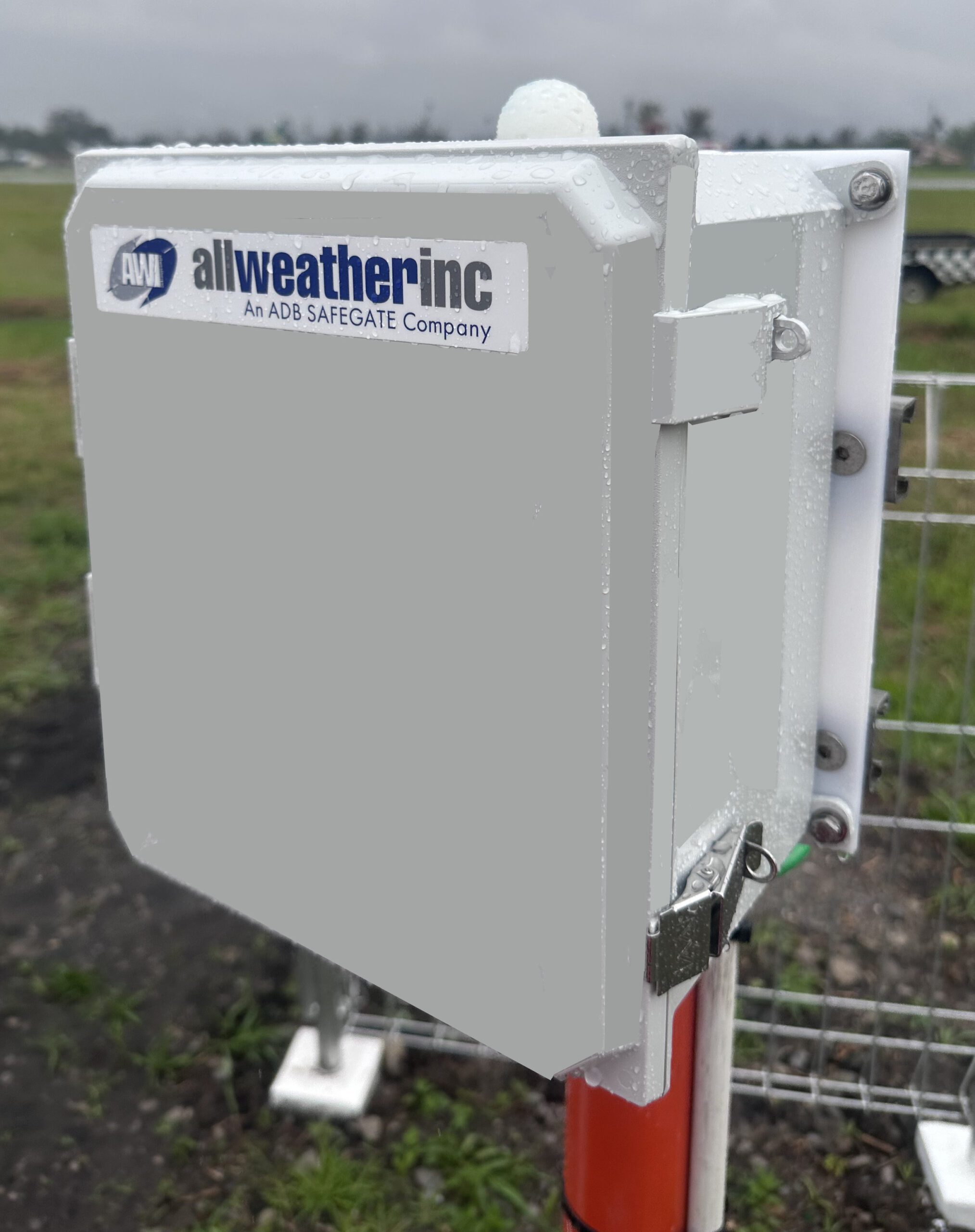
Model 6500 - Thunderstorm Sensor
The Model 6500 Thunderstorm Detector, capable of detecting electrical discharges associated with thunderstorms up to 250 miles and more from the sensor. The Model 6500 is a passive sensor that listens for electromagnetic signals with a receiving antenna. There is no transmitter, and therefore no harmful transmissions.
The Model 6500's antenna is a combined crossed-loop and sense antenna, which can correlate the electric and magnetic signatures of lightning strikes better than other systems due to its patented sense channel technology. The antenna has been designed to help filter out pulsed noise from sources other than atmospheric electrical discharges to ensure accurate readings.
The processor in the Model 6500 houses the data acquisition circuitry, along with circuitry to process strike data and communicate with the AWOS Data Collection Platform (DCP). The lightning detection processor digitizes, analyses, and converts the discharge signal into range and bearing data, then stores the data in memory.
The Model 6500 is Federal Aviation Administration (FAA) certified, meeting the most current regulatory requirements. For a detailed product data sheet, click here.

Model QLTX - Thunderstorm Sensor
The QLTX Lightning Detection Sensor detects and locates lightning events that occur within 200 nautical miles (300 km) of its antenna. The antenna detects the electrical and magnetic fields generated by intra-cloud, inter-cloud, or cloud-to-ground electrical discharges. The resulting “discharge signals” are sent to the processor.
The QLTX sensor uses a combined crossed-loop and passive antenna, which correlates the electric and magnetic signatures of lightning strikes. The antenna has been designed to filter out pulsed noise from sources other than lightning discharges.
The QLTX antenna detects the electrical and magnetic fields generated by the electrical discharges and sends the resulting “discharge signals” to the processor. The processor digitizes, analyzes, and converts the discharge signals into range and bearing data, then stores the data in memory. For a detailed product data sheet, click here.