Rain Gauges
AWI rain gauges are designed for many years of accurate, trouble-free operation. The built-in level and pre-drilled feet on our tipping bucket rain gauges will help to simplify installation. Our patented all-metal designs (including aluminum, nickel-plated brass, and stainless steel) ensures your rain gauge will maintain accurate operation for years to come.
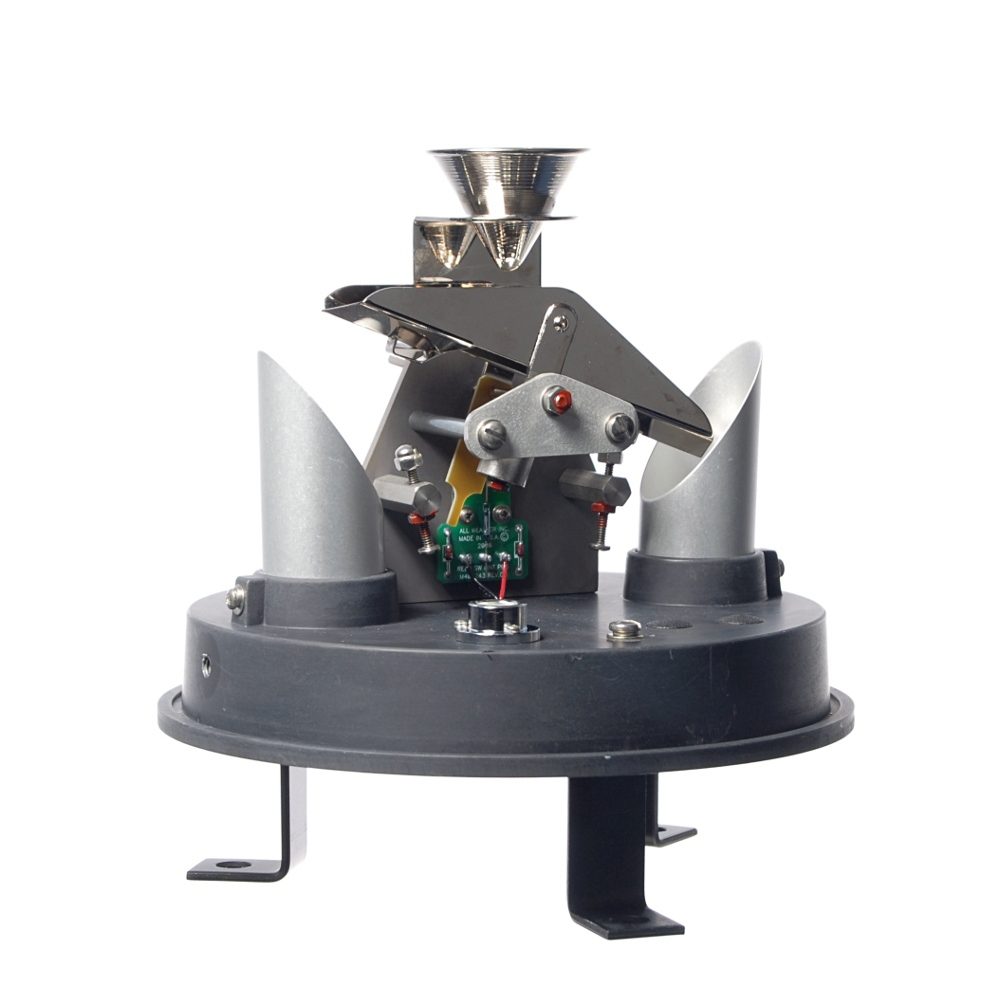
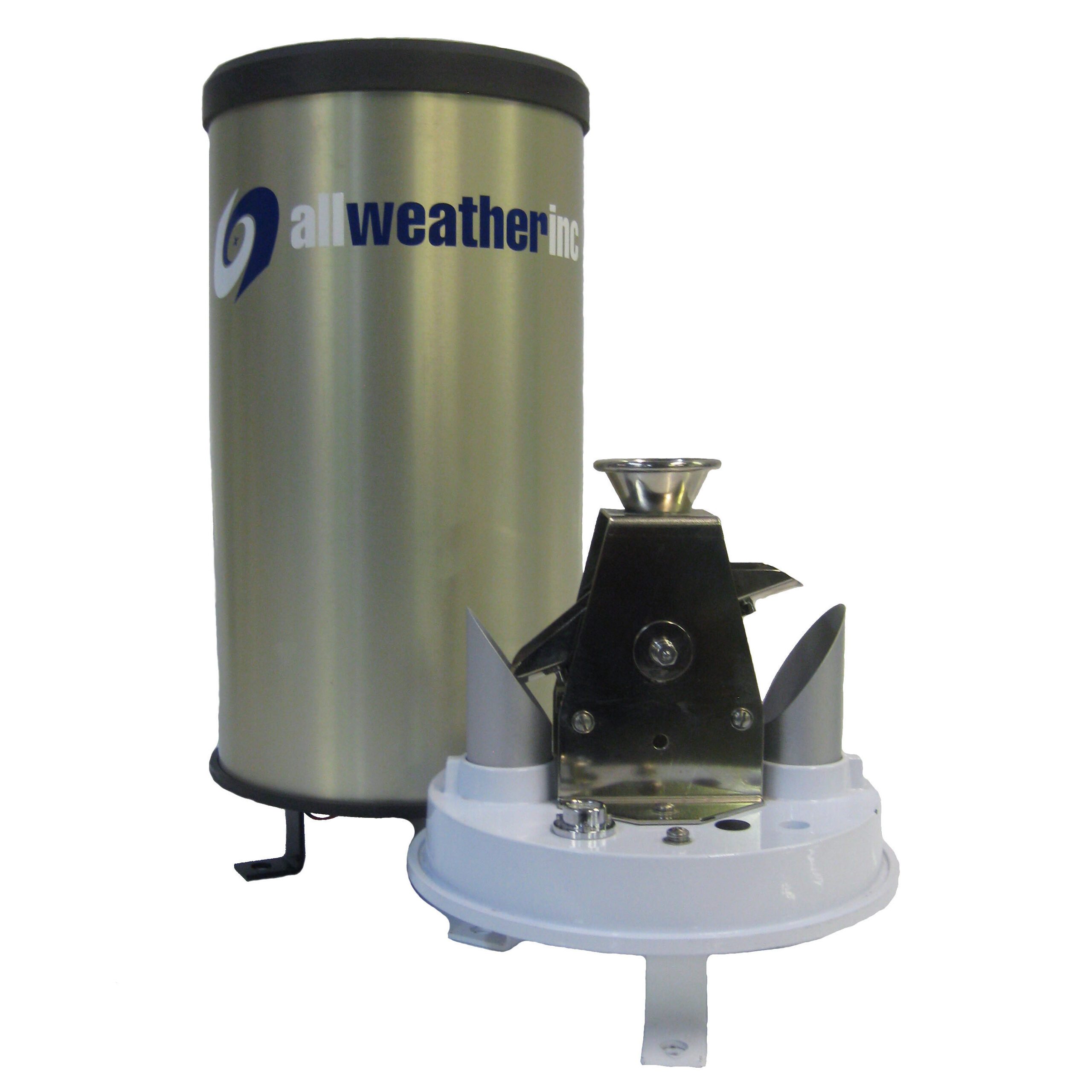 The 6011 Series Tipping Bucket Rain & Snow Gauges are standard, precision instruments for measuring rainfall volume and/or rate. Rain enters the gauges through a large funnel, the rim of which is protected by a metal ring to prevent distortion. Collected water passes through a debris-filtering screen and is funneled into one of the two tipping buckets inside the gauge. The bucket tips when a given amount of water has been collected; the amount of which is determined by gauge calibration. As the bucket tips, it causes a 0.1 second switch closure. The tip also brings a second bucket into position under the funnel, ready to fill and repeat the cycle. After the rain water is measured, it drains out through tubes in the base of the gauge. These drain holes are covered by screens to prevent insect entry.
Various models in the 6011 series offer data collection in either standard or metric units. For additional details please see the specifications listed on our product data sheet.
Present Weather Sensors
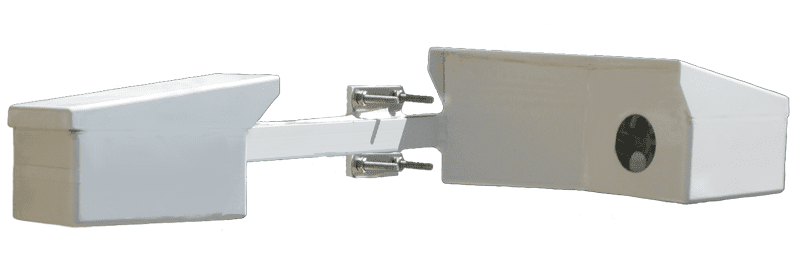
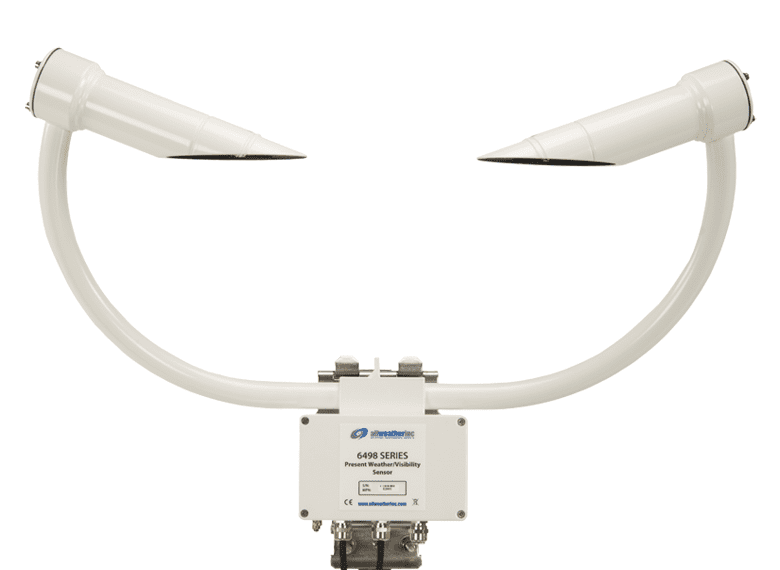 The Model 6498 is an infrared forward scatter present weather/visibility sensor designed for the varied applications of automatic weather stations. This unit was engineered to measure environmental variables in even the harshest conditions. The sensor’s all-metal housing will provide years of uninterrupted weather monitoring while the self-regulating design minimizes maintenance by extending time between calibrations. The Model 6498 is capable of self-diagnosing dirty lenses and will indicate when lenses are contaminated and need to be cleaned.
For visibility measurement, the Model 6498 employs field tested forward scatter technology, utilizing the industry standard scatter angle. Its high speed sampling rate makes the Model 6498 ideal for rapidly changing conditions as it reduces the likelihood of missed events such as rain and hail.
For technical specifications, download the product data sheet here.
Freezing Rain Sensors
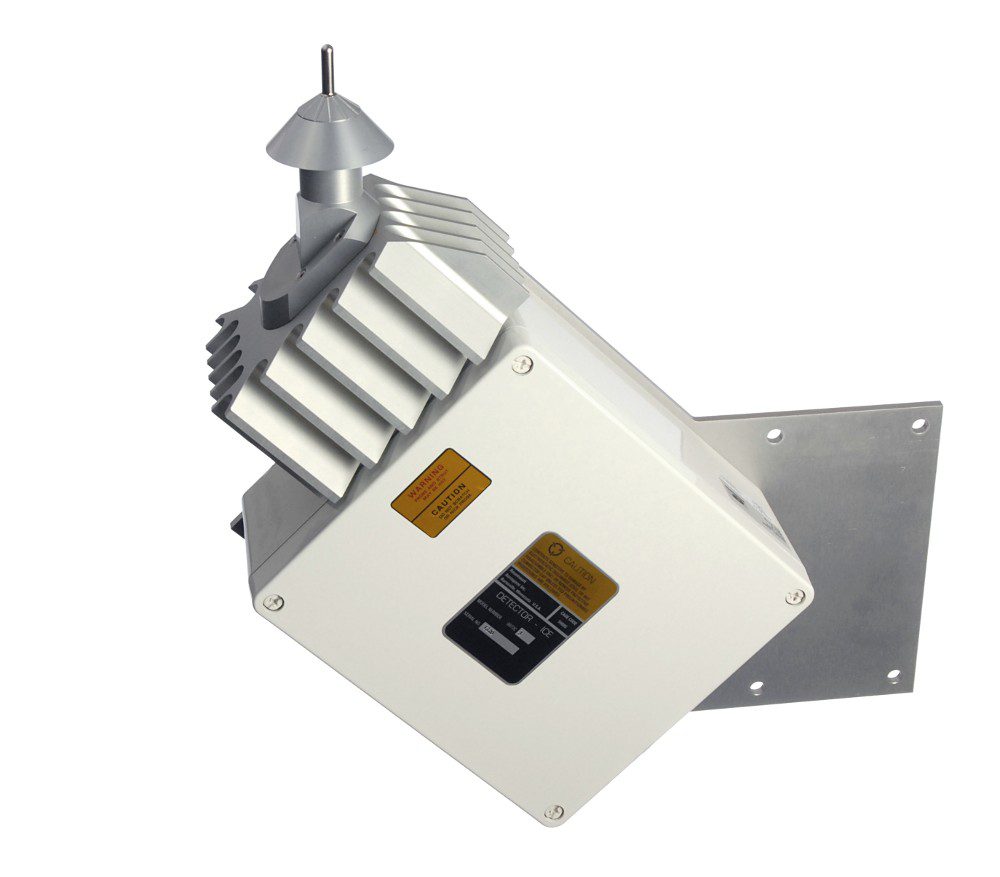 The FAA certified, Model 6495 Freezing Rain Sensor uses an ultrasonic axially vibrating probe to detect the presence of icing conditions. The vibrating frequency of the probe decreases with the accumulation of ice, frost, or wet snow. After ice has accumulated on the probe to a predetermined thickness, the AWOS DCP instructs the sensor to turn on it's internal heaters to deice the probe.
The powerful deicing system is capable of completely melting 3.8 mm of ice on the probe within 30 seconds at -20°C, while requiring less than 400 watts of power to operate. Following the deicing cycle, a heat sink dissipates the heat from the probe assembly. The heat sink provides a recovery time of approximately 10 minutes after deicing, and thermally isolates the probe assembly, ensuring accurate measurement at temperatures near 0°C.
When used with an All Weather Inc. AWOS, the Model 6495 reports frequency values once each minute. The system then combines this information with data from other sensors on the AWOS to generate freezing rain reports.
Calibration Devices
Model 60103 - Rain Gauge Calibrator
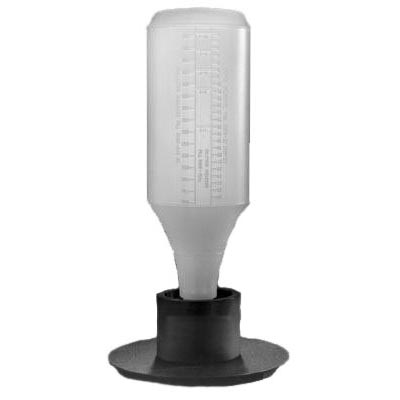
The 60103 Rain Gauge Calibrator is designed for easy field checks on the calibration of tipping bucket gauges, but it can be used for laboratory calibration procedures as well. The calibrator consists of a plastic bottle to hold water, a stand to set the bottle in the gauge funnel, and a constant head orifice assembly. A measured amount of water, equal to 100 tips of the bucket assembly, is directed into the gauge at a constant rate of 2 inches per hour. If the readout device attached to the gauge records more or less than 100 tips, recalibration should be considered.
This calibration method provides the greatest accuracy and repeatability possible because it is based on an average over 100 tips. In addition, the 60103 is unbreakable and therefore better suited to field use than fragile pipettes or graduated cylinders. A fill line is indicated on the water bottle for ease of use. However, for maximum accuracy the amount of water added to the bottle can be determined using a laboratory balance.